

4U LHX (Air-to-Liquid Heat Exchanger) – nVent
Air-to-Liquid Heat Exchanger
This product is available from Milexia Italia
Contact our experts
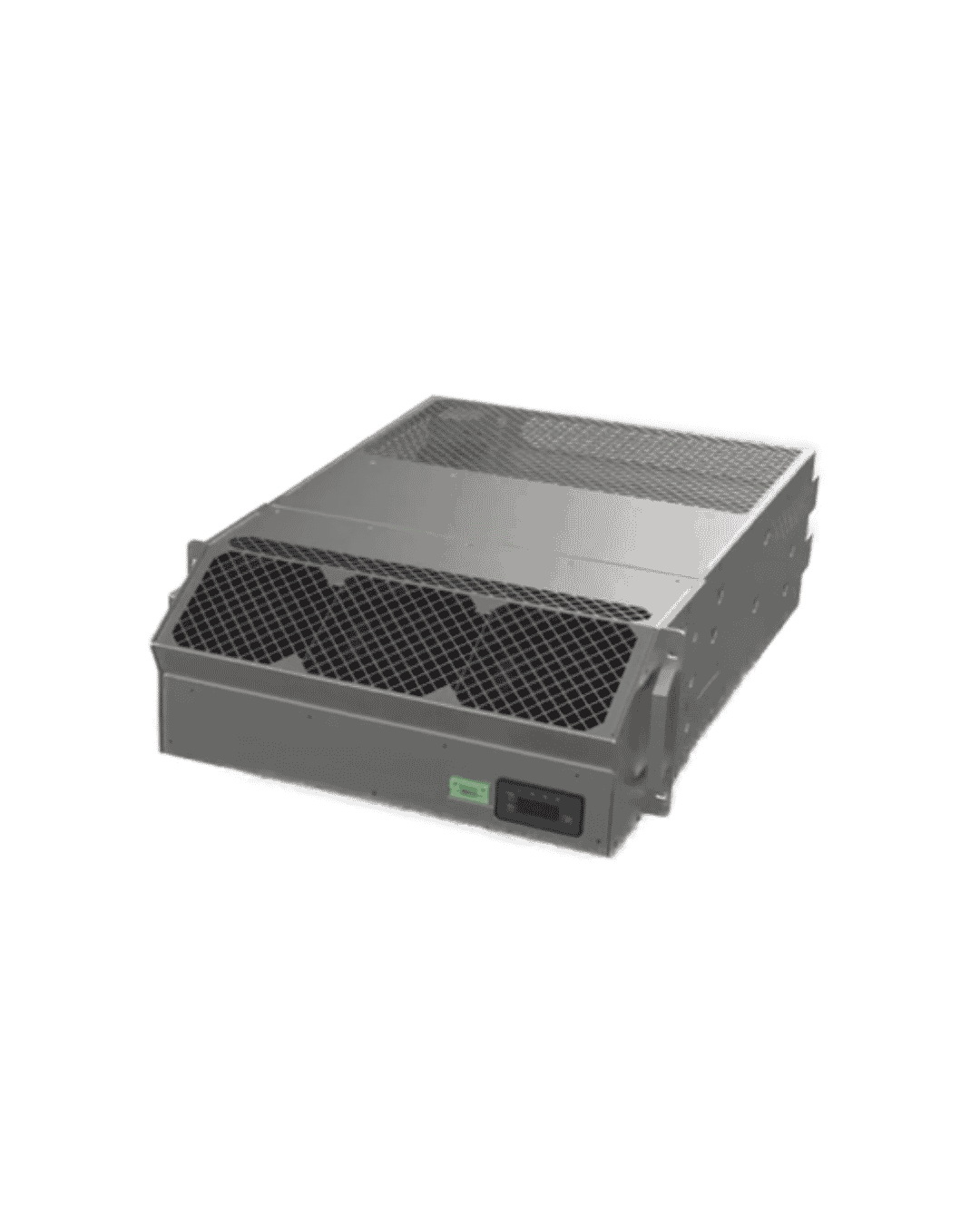
Higher heat density is a major concern when electronics in 19” applications are upgraded. Conventional methods of in-rack forced air or air conditioning may not be enough to protect vital electronics from overheating with the rapid advancement of AI chips & GPUs.
Designed in a compact, 4U size to minimize space, the nVent air-to-liquid heat exchanger can be installed and retrofitted into any 19” cabinet with at least 800 mm depth.
The Ruggedized version can meet the requirements of naval and land-based defense applications.
The COTS air-to-liquid heat exchanger enables short lead time design, offering multiple levels of cooling performance, allowing users to achieve higher computing density in new racks and existing applications.
Advanced Cooling
- Provides up to 7.5 kW heat dissipation using integrated fan units
- Designed for front-to-rear airflow, aligned with standard rack cooling architectures
- Physical separation of intake and exhaust air paths to prevent thermal recirculation
- Cooling positioned close to heat-generating components, enabling fast response to thermal load changes
- Supports dynamic adjustment of liquid flow and airflow for stable operating conditions
Integration & Deployment
- Ruggedized design suitable for harsh and defense-related environments
- Complies with EMC requirements, ensuring reliable operation in sensitive electronic systems
- Designed for tool-less or simplified mounting in standard 19″ environments
- Retrofit-ready, enabling integration into existing cabinets without system redesign
- COTS-based architecture, allowing configuration flexibility while reducing development time and lead times
Monitoring & Control
- Integrated controller with intelligent fan speed regulation based on thermal demand
- Equipped with temperature sensors at both intake (cold) and exhaust (warm) air zones for accurate thermal profiling
- Enables local and remote monitoring and control through system interfaces