

After nearly two decades of the EU’s liberalisation of rail transport, the intention to ramp up competitiveness and revolutionise a sustainable high-profit rail network is well understood. And different countries have chosen different paths, leading to different results.
The liberalisation of the railway system has progressed intensely since the introduction of the EU’s ambitious and large-scale fourth railway package for the commercial long-distance rail market in 2016. Eliminating the exclusive rights of existing operators has been a core objective of the legislation movement from the outset.
The first railway package introduced in 2001, made public tendering a standard process. Railway companies for the first time were given the chance to enter this market under a free competition model that respects the principles of transparency and non-discrimination. This opened up opportunities in the European railway market for any European rail operator, public or private, from any country. Competition between incumbents and new players in the railway market has created greater capacity and inspired new technology innovation and services for travellers. Healthy competition is only a good thing, especially when it aims to drive down the prices for travellers, improve transport services and reduce the transport’s carbon footprint. However, in a highly complex and evolving railway industry gaining and maintaining a competitive edge is challenging. And for new entrants and incumbents wanting to claim new railway contracts, where do they start, and what are the important considerations for managing the tender, procurement and project maintenance processes involved?
Leading by Example: The French Railway Market
The French railway market is dominated by SNCF, which operates the majority of the country’s rail services. The company is responsible for the operation and maintenance of the rail network, as well as the provision of passenger and freight services.
The railway market in France has undergone significant transformations in recent years driven by the need for modernisation and improved efficiency of passenger services and experiences. And faces several challenges, including an aging infrastructure and pressing environmental concerns, relating to carbon emissions and noise pollution. As such the French government has adopted an aggressive and meaningful strategy with €100bn investment over 16 years to expand and upgrade the country’s rail infrastructure, with key objectives of improving daily travel and reducing carbon emissions.
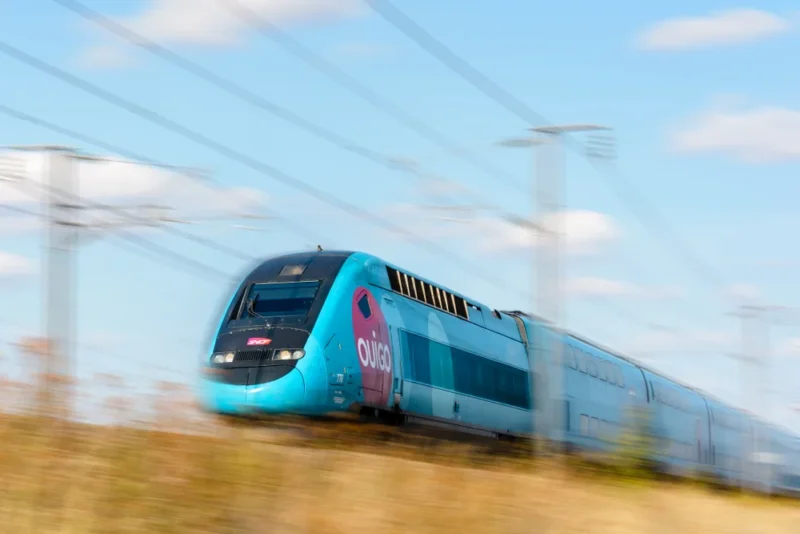
Underpinning this transformation in the French railway market is the call for tender structuring process now that passenger rail transport is open to new entrants on lines formerly reserved for national operators. For example, Italian rail operator Trenitalia has operated Frecciarossa trains on the Paris–Lyon line since autumn 2021, and Spanish rail operator Renfe has served the Paris–Marseille corridor since 2024. France has seen a significant increase in the number of private rail operators, offering a range of services from high-speed trains to regional commuter services. And companies such as Ouigo, a subsidiary of SNCF have disrupted the traditional rail market by offering low-cost, high-quality services that appeal to a wider range of passengers.
However, for the many tender successes, there have been failures too. The open-access rail co-operative Railcoop had been hoping to rejuvenate the Bordeaux to Lyon route but failed to ever launch the passenger service and went into liquidation. Whilst it is not clear what exactly went wrong, it should be a stark reminder that the tender application is just one element of the process. Strategy, planning, and maintenance to optimise any supply chain service infrastructure is an ongoing challenge.
The opportunity for private companies to contribute to the development of the country’s railway infrastructure is a highly lucrative one for companies of all sizes and specialties. If they get it right for the long haul. Entering a highly competitive new market presents uncertainties and risks with strict compliance procedures that need to be adhered to. On top of this, an aggressive price strategy coupled with a low carbon footprint should always be a top priority for any tender application.
It is of utmost importance to understand the railway tendering process and develop a structured approach for securing and maintaining contracts in the evolving rail industry. At Milexia we recommend a strategic four-step process to gain a footing in the competitive French railway market.
Here we outline the four-step process, referring to a case study for the renovation of the TGV Atlantique trains on the SNCF Hellemmes-Lille maintenance site in two phases, OPMV1 and OPMV2. Involving the supply of electronic component kits for the upgrading of electronic boards on 1st generation TGVs, of several categories and on several TGV models.
Stage One: The Qualification Phase
The tendering of rail services subject to Public Service Orders (PSOs) is a long and complex process and sets limited timescales for bids meaning bidders have limited time to prepare their offers.
The perimeter of the tender must be properly defined and qualified from the outset. New entries should identify the robustness of their value proposition against the perimeters of the tender, including operating costs, maintenance costs, and rolling stock availability.
Ensuring that rolling stock is available to enter the market in the timeframe set by the tender requires an agile business model to be in place to adapt to changing market conditions and demands. Any tender application must demonstrate a commitment to safety, quality, decarbonisation, and sustainability, showcasing relevant certifications and innovative practices. And must be backed with hard evidence.
For TGV Atlantique trains tender project this involved:
- The Identification of current component references from the information of the operator and defined schematics.
- An in-depth meeting with the operator to finalise the list of requested components and their technical equivalents according to the life phase of the component, the obsolescence of certain components, and their need on each type of train of the different types of TGV, Standard and Duplex.
Stage Two: Project Tenders Offer
For driving the contract forward ideally, new entrants into the railway market should consider assigning or outsourcing a skilled bid team – experts in rail engineering with strong technical skills, project management, and financial expertise. And who can advise on how best to utilise existing in-house solutions and optimal procurement needs and standards, in line with a roadmap for new product development.
For TGV Atlantique trains tender project this involved:
- Identification of sources of supply for all components to be included in the supply kit.
- Establishment of a complete pyramid structure of kit nomenclature – corresponding to the renovation of a board, to the type of train and TGV.
Stage Three: Supply Chain Management
From stock availability, quantities according to their needs, and adapting the multiple small sites available to serve the infrastructure. The winning organisations are those that can develop a forward-thinking approach for every part of the supply chain, from rolling stock procurement and demand planning to parts delivery and maintenance. And show agility for production delivery in line with defined timelines.
For TGV Atlantique trains tender project this involved:
- Presentation to the operator of the methodology for the supply chain implementation plan and process.
- Establishment of a three-year supply schedule and the two phases OPMV1 and OPMV2.
Stage Four: Ongoing Installation and Maintenance
Effective planning, coordination, and execution are essential for ensuring the timely completion of projects while maintaining high standards of quality and safety.
It is about being meticulous with the coordination of the lifetime of a project and building strategies aligned to KPIs. From planning and scheduling site installations, implementing safety protocols and regulations for compliance to managing resources, and organising logistics.
For TGV Atlantique trains tender project this involved:
- Implementation and monitoring of the renovation operation.
- Proper identification of the components necessary for each application and meeting the operator’s technical requirements.
- Complete traceability of the source, origin, and quality of the components supplied.
- First-class productivity and industrial performance through the implementation of a structured process.
- The delivery of ready-to-use named-out kits made available for the trains undergoing maintenance, in line with the schedule requested by the operator.
- Economic performance indicators and reporting for the operator.
Conclusion: Realising the Opportunities From Railway Liberalisation
Whilst there is a huge opportunity for new incumbents to make their mark and profit from the railway liberalisation movement, it is not easy. Winning the tender is just the beginning. Navigating opportunities from EU-Rail liberalisation must be guided by specialised expertise for the definition, realisation, monitoring, and maintenance of any project. Only then can new entrants into the market truly make an impact and help railways become socially and economically sustainable.
By Laure El Mhadder, Sales Director Electronics at Milexia France and Alain Gorrec – Integration Advisor at Milexia France
As seen in Railway Techonology, August 2024
Neueste Beiträge in In the Media

Where War Machines Meet Tractors: The Convergence of Defence and Agriculture
Descubre cómo estos sectores aparentemente no relacionados tienen el potencial de aprender y beneficiarse mutuamente.

Resilient Architectures for Automated Test Benches
¿Cómo están ayudando los bancos de pruebas automatizados a que la industria de test y medida mantenga el ritmo de la creciente complejidad de los sistemas electrónicos en distintos sectores?

Super-Efficient Perovskite Solar Cell Technology
Thierry Grenut, director de ventas de Instrumentación Científica en Milexia France, comparte el impacto transformador de la tecnología de celdas solares de perovskita en su último artículo.

Powering Precision: Why the Future of High-Power Test Benches Must be Fully Integrated and Automated
Descubre cómo la integración y la automatización están cambiando las pruebas para una amplia gama de industrias.