The Story of the MCX8000 Satellite Gateway: A Revolution for Global Broadcasting

Trusted for its robust and efficient high-performance capabilities, the MCX8000 is a significant leap forward from the original M6100 (and MCX7000), offering advanced features to ensure it exceeds the demands of modern broadcasting.

This article charts the origin story of the M6100 workhorse, its evolution into this ground-breaking MCX8000 model, and why now is the right time to invest in these new levels of efficiency, reliability and cutting-edge functionality.

The History

M6100 Broadcast Satellite Modulator

In September 2012, ST Engineering iDirect (formerly Newtec) launched its powerful and feature-rich M6100 Broadcast Satellite Modulator.

Widely praised for its advanced capabilities, efficiency, flexibility and support, it allowed broadcasters to deliver consistently high-quality, reliable services – and quickly became a household name.

This robust, reliable solution was soon nicknamed ‘The Workhorse’, offering extensive features like advanced DVB S2 capabilities, efficient use of bandwidth and seamless, high-quality transmission of broadcast signals.

Unlike many other similar devices, it could consistently perform under various conditions and offered a high level of operational flexibility. This set the standard in the industry.

MCX7000 Multi-Carrier Satellite Gateway – Steps in the right direction

Just a few years later, in 2015, the MCX7000 Multi-Carrier Satellite Gateway was released, promising numerous upgrades to help support the changing needs of the modern broadcaster.

While retaining the same outstanding qualities that had made the M6100 the industry standard, the MCX7000 introduced several upgrades. This included multi-carrier capabilities for more efficient bandwidth utilisation, better handling of multiple streams and enhanced spectral efficiency.

By doing so, they bridged the gap between traditional broadcasting needs and emerging technology advancements.

However, many organisations viewed these improvements as promising, but not substantial enough to justify an upgrade, especially as the M6100 was so highly regarded and reliable.

The MCX8000 Multi-Carrier Satellite Gateway – A Revolution

Improvements often come in incremental steps for satellite broadcast technology, as shown with the added features of the MCX7000. However, a major step forward occurred in September 2021 with the release of the MCX8000 Mult-Carrier Satellite Gateway.

This new model ticked all the same boxes as the M6100, yet offered a leap forward in technology. The MCX8000delivered even greater reliability, robustness, efficiency, higher performance metrics, and a suite of advanced functionalities to meet every need of the modern broadcaster.

These features offer true futureproofing for broadcasting businesses, offering enhanced scalability and flexibility while helping to keep costs low. As broadcasters realised this was a truly revolutionary device and worth the investment, the popularity of the groundbreaking MCX8000 model has soared, setting the standard for broadcasting in the digital age.

Future-Proof Your Business: Why Upgrade to the MCX8000

The MCX8000 is a cutting-edge multi-carrier satellite gateway that offers an enhanced broadcasting experience for both audience and broadcaster alike.

Optimising performance, efficiency and scalability, this revolutionary device not only meets the demands of modern broadcasting and data transmission, but also offers flexibility and scalability in a cost-effective solution.

  1. Superior modulation and coding

With advanced DVB S2X modulation that improves spectral efficiency, the MCX8000 offers significantly higher data rates than its predecessors. 

As a result, it excels at supporting high-demand applications where bandwidth efficiency is key. High-definition TV or large data streams can be handled with ease and precision, optimising the overall viewing experience. 

  1. Enhanced Multi-Carrier Capabilities

With enhanced multi-carrier capabilities, the MCX8000 helps modern broadcasters’ stream to multiple platforms while maintaining a high-quality, problem-free, audience experience. By optimising bandwidth usage, it provides a robust and versatile solution that enables broadcasters to maximise their capacity.  

  1. Advanced Error Correction and Signal Quality

Should the worst happen, and signal quality or reliability drop, the MCX8000 can ensure the high-quality broadcast continues, without a hiccup. 

This means that the audience can continue to enjoy a high-quality viewing experience, no matter what challenges arise. This is thanks to the MCX8000’s advanced error correction techniques that ensure signal quality, reliability and clarity, while preventing signal degradation and interference.

  1. Energy efficiency and cost-effectiveness

The MCX8000 offers optimal performance without costing the earth. Its advanced power management system means that the device doesn’t require excessive energy, reducing both the broadcasters’ operational costs and carbon footprint. 

  1. Scalability and Flexibility

The MCX8000 can adapt to various broadcasting requirements, including small local companies to larger international organisations.  

Whatever your needs, you can scale your business as demand increases, without needing to upgrade your technology. This flexibility, enables you to grow and invest in your business, wherever in the world you want to broadcast from.  

  1. Future-Proof Technology

The MCX8000 supports the latest broadcasting standards and protocols, so integration with  emerging technologies is effortless. You’ll be able to maintain an edge against your competitors, all the while relying on the MCX8000 as your new workhorse for many years to come. 

Final thoughts

The MCX8000 is a revolution in satellite broadcasting technology, offering ground-breaking improvements and advanced features that perfectly meet the needs of modern broadcasting. With unparalleled performance, efficiency, scalability, flexibility and cost-effectiveness, this model takes the M6100 legacy forward, helping businesses deliver outstanding broadcasts, stay competitive and invest in the future of their businesses.

Want to learn more about the MCX8000?

Contact us today to learn how it can revolutionise your broadcasts. 
 

Check out the product video

MCX8000 Satellite Gateway: Expert Insights with Mick Lyons of Milexia

https://www.youtube.com/watch?v=zxbrWpEh0Wo

Milexia Group renforce son offre

Saint-Aubin, le 23 juillet 2024 – Milexia est heureux d’annoncer son expansion par l’acquisition de Whistler Technology.

Whistler Technology est spécialisée dans l’approvisionnement et la gestion de composants électroniques, garantissant efficacité et fiabilité à ses clients.

Grâce à cette acquisition stratégique, Milexia continue d’élargir sa présence et ses offres de services, renforçant ainsi son engagement à fournir des solutions de chaîne d’approvisionnement de haute qualité, fiables et efficaces dans divers secteurs.

Depuis 2001, Whistler Technology dessert l’industrie électronique et a connu une croissance régulière, soutenant ses clients à l’échelle mondiale dans différents domaines, notamment le secteur militaire, médical, automobile, industriel, aérospatial, des télécommunications et commercial. Son cœur de métier a toujours été les services stratégiques d’approvisionnement en composants électroniques, en s’appuyant sur l’expérience et les compétences de son équipe ainsi que sur une chaîne d’approvisionnement mondiale en expansion, fondée sur des partenariats de confiance et de longue durée. En tant que fournisseur accrédité AS9120B, Whistler Technology dispose d’un système de gestion de la qualité solide, garantissant à son équipe d’offrir les plus hauts niveaux de service et de qualité.


Jonathan Vincent, Directeur Général de Whistler Technology : « Faire partie du groupe Milexia nous permet de franchir une étape clé dans notre plan de croissance pour devenir une organisation multinationale, offrant à nos clients, anciens comme nouveaux, un service plus large et plus complet. Cela nous permettra de devenir un partenaire beaucoup plus stratégique pour nos clients et nous donne également l’opportunité de contribuer à la stratégie commerciale déjà impressionnante de Milexia et à son équipe. De plus, nous sommes ravis d’apporter notre savoir-faire et notre expertise à Milexia pour les offrir à leurs clients existants. Nous sommes impatients de jouer notre rôle dans la transformation de Milexia en une force mondiale encore plus grande dans l’industrie de la distribution électronique, facilitant l’accès à des solutions d’approvisionnement complexes. »

Xavier Gaillard, CEO du groupe Milexia : « Les équipes de Whistler Technology, grâce à leur expertise en services d’approvisionnement en composants électroniques, complètent celles de Milexia. Cette acquisition renforcera la position de notre groupe en tant que leader européen des distributeurs de technologies à valeur ajoutée, en ajoutant notamment des services clés pour nos clients tels que la gestion de l’obsolescence, l’externalisation de l’approvisionnement stratégique, tout en suivant un processus rigoureux de qualité, de test et d’inspection. Cela s’inscrit dans nos ambitions de croissance en Europe et au-delà, afin de mieux servir notre écosystème de clients et de partenaires. »

À propos de Milexia : Fondé en 1971, le groupe Milexia est l’un des principaux fournisseurs européens de composants électroniques de haute qualité, de systèmes et de technologies d’instruments scientifiques. Le groupe dispose de bureaux et d’entrepôts en France, en Italie, en Espagne, au Royaume-Uni et en Allemagne. Il possède également des centres techniques en France et au Royaume-Uni, qui proposent des solutions personnalisées, d’installation, de formation et de maintenance pour les secteurs de la défense, de l’espace, des transports, des télécommunications satellitaires, de l’instrumentation scientifique et autres industries civiles.

Your Innovative Technology Partner | Milexia Group

À propos de Whistler Technology : Fondée en 2001, Whistler a été conçue pour être un partenaire unique en gestion intelligente de la chaîne d’approvisionnement, offrant aide et expertise à chaque étape, depuis la conception initiale des produits de nos clients jusqu’à la production en volume et l’expédition des produits finis aux clients.

Whistler Technology

Contacts presse :

UK –  Paulina MICHALSKA : paulina.michalska@milexia.com

France – Léo ROBIN : leo.robin@milexia.com

France –  Carla DOYEMET : carla.doyemet@milexia.com

Italy – Silvia PASSAFARO : silvia.passafaro@milexia.com

Spain – Gianfranco ABANTO : gianfranco.abanto@milexia.com

Germany – Saskia WAGNER : saskia.wagner@milexia.com

Milexia Group announces the acquisition of Cabcongroup.

Avec cette acquisition stratégique, Milexia continue d’étendre sa présence et ses offres de services en Europe et en Asie, renforçant son engagement à fournir des produits technologiques et des solutions de chaîne d’approvisionnement de haute qualité, fiables et efficaces dans divers secteurs.

Cabcongroup sert l’industrie électronique depuis 2003 et n’a cessé de se développer pour soutenir les clients dans de nombreux secteurs. Cabcongroup opère à partir de 4 sites différents : Danemark, Norvège, Suède et Hong Kong, et très prochainement Cabcongroup étendra sa présence avec de nouveaux bureaux en Finlande et en Pologne.

Brian Dehlsen, PDG de Cabcon Group déclare : ”Au cours des 20 dernières années, nous avons établi Cabcongroup comme un distributeur à valeur ajoutée significatif avec une attention principale portée aux clients finaux au Danemark, en Suède et en Norvège. Nous sommes maintenant prêts à élever Cabcongroup au niveau supérieur, et nous voyons une excellente synergie en rejoignant Milexia. Nous sommes enthousiastes à l’idée de faire partie du Groupe Milexia et sommes impatients de poursuivre ensemble notre voyage de croissance.”

Xavier Gaillard, PDG du Groupe Milexia déclare : ”Nous sommes ravis d’accueillir les équipes talentueuses de Cabcongroup chez Milexia. Grâce à leur engagement, ils ont développé un réseau mondial de fabricants sélectionnés parmi les meilleurs de leur catégorie pour fournir un support local et une livraison globale. Initiée il y a plusieurs années, l’objectif de la stratégie de Milexia est de se positionner comme le leader de la distribution à valeur ajoutée de composants et systèmes électroniques en Europe. En unissant nos forces avec Cabcongroup, nous étendons la présence européenne de Milexia et sommes en mesure de répondre plus largement aux attentes de nos clients et fournisseurs dans toute la région nordique.”

À propos de Milexia:
Fondé en 1971, le Groupe Milexia est l’un des principaux fournisseurs européens de composants électroniques de haute qualité, de systèmes et de technologie d’instruments scientifiques. Il possède des bureaux et des entrepôts en France, en Italie, en Espagne, au Royaume-Uni et en Allemagne. Le Groupe dispose de centres techniques en France et au Royaume-Uni, qui offrent des solutions personnalisées, d’installation, de formation et de maintenance pour les industries de la défense, de l’espace, des transports, des communications par satellite, de l’instrumentation scientifique et d’autres industries civiles.

Votre partenaire technologique innovant | Groupe Milexia

À propos de Cabcongroup:
Établi en 2003, Cabcongroup est un fournisseur basé en Scandinavie de composants passifs, électromécaniques et de faisceaux de câbles pour l’industrie, à l’échelle mondiale. Nous nous efforçons de fournir la meilleure solution pour une application donnée en étroite collaboration avec nos clients et fournisseurs. Nous nous considérons comme un partenaire de conception et avec un personnel expérimenté et une base solide de fournisseurs, nous aidons nos clients à optimiser les processus et à développer des technologies avancées pour un avenir durable.

Accueil – Cabcon A/S (cabcongroup.com)

Contacts presse :
UK – Paulina MICHALSKA : paulina.michalska@milexia.com
France – Léo ROBIN : leo.robin@milexia.com
France – Carla DOYEMET : carla.doyemet@milexia.com
Italie – Silvia PASSAFARO : silvia.passafaro@milexia.com
Espagne – Gianfranco ABANTO : gianfranco.abanto@milexia.com
Allemagne – Saskia WAGNER : saskia.wagner@milexia.com

Greening your fleet – examining the case for EV adoption

Adoption of electric vehicles (EVs) is one obvious solution if we are to decarbonise our highways and head off the climate crisis. EVs are growingly popular in the UK, thanks to technology advances and supportive government policies.

The country’s fleet operators are at the forefront of this trend, their EV acquisitions accounting for 53.3% of last year’s 2.3m new vehicle registrations. Research findings from energy company Centrica Business Solutions indicate that fleet owners are set to raise their EV spending by 50% within the next 12 months.

The incentives behind fleet EV adoption are numerous. With their simpler and more compact design, EVs use less money-consuming energy than alternatives powered by internal combustion. They have lower maintenance overheads, with a total cost of ownership that can be recovered within five to eight years, depending on the vehicle’s range. And of course, they help reduce greenhouse gas emissions, cut noise pollution in urban areas and are more recyclable.

So why delay?

There are nonetheless reasons why some fleet operators might be hesitant to migrate to electric transport. For one thing, the electrification of HGVs is progressing at a different pace to that of smaller vehicles, like cars and vans. eHGVs are still in relative infancy thanks to various challenges. They demand costlier and heavier batteries than smaller vehicles and suffer from a shortage of appropriate charging infrastructure on long-haul routes. The upfront capital costs of electric HGVs can be high, making it critical to weigh the total cost of ownership over the vehicle’s operational lifespan. They do at least have the same lower running costs compared with diesel vehicles, as well as less frequent maintenance needs and potential tax advantages.

The eHGV market will need to change. There are currently around 4,000 zero-emission trucks operational across Europe, but this will have to expand to 400,000 trucks by 2030 if the continent’s carbon emission targets are to be met. Today’s 2% of total truck sales will have to hit double-digit levels in short order.

It’s not just HGV fleet managers that might have EV reservations. Most of today’s EVs depend on lithium-ion batteries which come with the occasional propensity for overheating and catching fire. Commercial EVs can in any case expect to have a shorter lifespan than domestic ones due to the constant battery recharging that must be done.

There’s the matter of range. On a full charge, most EVs can only travel 300 to 400 miles before needing to stop and charge up. This can take up to 12 hours at a Level 1 charging station, should a Level 2 or Level 3 station be unavailable. This makes a world of different where hauling freight over long distances is involved.

Battery technology moves on

On the plus side, battery technology is evolving. Solid-state batteries promise nearly double the energy density of lithium-ion ones on the basis of weight, while permitting faster charging and in all probability increasing the safety and stability of cells. Being smaller and lighter means that manufacturers can put far more power in the same space, giving an EV or hybrid vehicle something like twice the range of one dependent on lithium-ion. This has radical implications for the commercialisation of the EV. But solid-state technology is a work in progress, and there are manufacturing and longevity hurdles to be overcome on the way to mass production.

Charging technology is also moving on. Electric drivers can now use ultra-fast charging or high-power charging (HPC) where available, giving them between three and seven times faster charging than conventional stations.

Fleet managers may well seek to evaluate how the potential of EVs sits alongside that of vehicles using biofuels. Both options, in truth, have merits and demerits. EVs have the edge in performance, and note should be taken of huge increases in the number of available charging points. Innovation is making batteries better and cheaper. EVs commonly have higher upfront costs than biofuel vehicles, but lower long-term operating costs. EV evangelists point to the impact that biofuel production has on the use of land resources, arguing that it impacts food production. But biofuel technology is also evolving in ways that might cut that impact.

Hydrogen-powered fuel cells are the future for some. At COP28, more than 30 countries supported the role of clean hydrogen in decarbonisation. EV batteries are many times heavier than biofuel or hydrogen cells and can take hours to fully recharge. Refuelling a hydrogen-powered vehicle takes around the same time as filling up a conventional petrol car.

Clearly there are no easy answers in determining how we can decarbonise road transport and enjoy greener fleets. But technology is evolving and options multiplying, offering hope to a logistics sector that wants to do its best to contribute to an environmentally friendly future.

By Thierry Grenut, Sales Director, Milexia France

Source: Logistics Voices

Delivering essential comms for UK International Search and Rescue

Milexia, together with ST Engineering iDirect, a global leader in satellite communications, Holkirk Communications, a communications manufacturer of lightweight satellite uplink design, and Intelsat, operator of one of the world’s largest integrated satellite and terrestrial networks, partnered to provide UK International Search and Rescue (UKISAR) with vital communications capabilities. 

New Holkirk Scorpion-Lite portable communication terminals, powered by the ST Engineering iDirect iQ 200 modem, were rolled out during the first responder search and rescue operation following the devastating earthquake in Morocco on the 8th of September 2023.

The earthquake, with a magnitude of 6.8, struck the northern coast of Morocco, causing widespread destruction to buildings, infrastructure and communication networks. The affected areas included the ancient section of Marrakech and remote settlements in the Atlas Mountains. As a result, the Moroccan government declared a state of emergency, and rescue teams and humanitarian aid were mobilised to support the affected population. 

Recognising the urgency of the situation, the UKISAR team led by Russ Gauden UK-ISAR National Coordinator deployed to  Morocco on the 10th of September, on behalf of the U.K. Foreign, Commonwealth & Development Office (FCDO) equipped with the new state-of-the-art communication technology. The Scorpion-Lite, pre-configured and certified to operate within the Intelsat FlexMove network, provided the UKISAR team with reliable and high-speed broadband connectivity, enabling them to establish seamless communication with their headquarters.

The Intelsat FlexMove network provides enterprise grade connectivity for mission critical applications everywhere. Powered by the ST Engineering iDirect Velocity® platform, FlexMove played a pivotal role in ensuring that the UKISAR team had access to always-on high-speed data, video, and voice communication in any environments they encountered.  The vital connectivity provided communications on the move to first responders to coordinate rescue missions, access to critical information and welfare networks for the team’s well-being and provided onsite central operations for medical support.  

The combined technology solution provided the UKISAR team with end-to-end connectivity that was easy to set up, offered a user-friendly interface for easy operation and a rugged design with the reliability and resiliency they needed to run their mission-critical operations.

Aghia Pal Singh MBE, Command & Control, UKISAR said:

“The Scorpion-Lite VSAT Terminal was used during the Morocco Earthquake rescue for the first time. Once set up, the terminals were reliable and fast with a data connection that is great value for money.  This also allowed us to provide internet connectivity for welfare facilities to the UKISAR team for the first time.” 

Dave Nicoll, Group Business Development Manager – Satcom Division at Milexia, commented: 

“The success of this partnership showcases ST Engineering iDirect and Milexia’s commitment to providing fast and efficient satellite communication solutions, even in challenging and remote scenarios. It’s great to see that the Holkirk Scorpion-Lite terminal and the Intelsat FlexMove network were able to contribute to the UKISAR team’s operations during such a critical mission.”

 
Craig Bowley, Regional VP, EMEA at ST Engineering iDirect, added: 

« ST Engineering iDirect is immensely proud of our long-term partnerships with industry leaders like Milexia and Intelsat. Collaborations such as the recent mission in Morocco exemplify the impact we can make when it truly counts. Our cutting-edge technology, represented by the ST Engineering iDirect iQ 200 modem and Velocity® platform, plays a crucial role in ensuring reliable and high-speed broadband connectivity, as seen with the deployment of the Holkirk Scorpion-Lite terminals during the UK International Search and Rescue operations. These partnerships underscore our commitment to delivering innovative and robust satellite communication solutions that empower first responders and aid organisations to efficiently carry out their missions, particularly in challenging and remote environments. » 

Emerging standards, tech innovation and strategies for a greener healthcare

Q. How are emerging technologies, being utilised to enhance traceability and transparency in the disposal and recycling of medical waste, contributing to greener healthcare practices?

A: As in every electronic segment healthcare is looking to minimise the use of harmful substances. The use of lead free solder where possible and prescribed is already normal, new antibacterial surfaces and the use of UV-light for disinfection minimises the requirement for chemical cleaning products, and new technical breakthroughs can replace entire technologies. For example, the use of radioactive substances in radiotherapy can be replaced by other means like proton particle accelerators.

Proton accelerators used in cancer treatments do not penetrate all the way through the body. Instead, they stop sharply at a depth determined by their energy. By modulating the beam’s energy and direction, clinicians can deliver radiation over a 3D tumour volume while protecting healthy surrounding tissue.

Radioactive waste is potentially highly hazardous. If not managed correctly remain highly radioactive for tens of thousands of years, posing a threat to agricultural land, fishing waters, freshwater sources, and humans. Replacing radioactive therapy with proton therapy eliminates the risk of radioactive waste not being properly managed and causing a risk to human health and the environment.

Q. Can the integration of smart sensors and real-time monitoring systems help healthcare facilities optimise their waste management processes, ensuring a more efficient and environmentally friendly approach?

A: Smart sensors are highly efficient for controlling and monitoring patient vitals in real-time, and within key control parameters. For example they can ensure that cooling chains for medications are uninterrupted, or if they are interrupted, they can detect where and for how long. They can detect exposure to harmful contamination, locate equipment in a hospital, ensure maintenance cycles and enable pre-emptive maintenance.

Furthermore, smart sensors can help to trace data, devices, substances, to ensure they are not lost, misplaced, misused, or disposed in an unsafe manner.

The continuous development in sensor technology is currently often driven by consumer electronics and makes it ubiquitous available and low cost. Every cell-phone user is using a number of these already: acceleration and motion sensors, fingerprint sensors, light and temperature sensors are used in all kinds of consumer electronics, cell phones, cars, and other commodities. Likewise, much more elaborate sensors like sensors for various gases, drugs, bacteria and viruses, radiation, blood oxygen, blood sugar etc. are rapidly developed and are becoming low-cost devices. All of these will replace other technologies that require more energy, biochemical processes and substances and other resources, helping to decrease the environmental impact.

Q. What role do digital platforms and communication technologies play in facilitating collaboration among healthcare institutions to share best practices in green strategies, including hazardous waste management and recycling initiatives?

A: Since many parties are involved in the value chain in medical technology from suppliers, hospitals, doctors to patients and waste management companies, a seamless documentation and exchange of data in the digital domain is crucial to monitor the complete lifecycle of a medical product. It is important to have technology available that spans over different platforms, is secure, and cannot be altered (e.g. manufacturing dates of perishable products).

One of the most innovative and powerful innovations in this field is the evolution of blockchain technologies and encryption. Blockchain technology is crucial to ensure the integrity of data, it can control who has access to it, who added or altered it, when and where.

Cloud-based healthcare data storage is vital for the reliable transfer and sharing of data across multiple locations and healthcare providers, to enable care teams to coordinate on patient care and Digital Imaging and Communications in Medicine (DICM) studies. AI applications coupled with cloud computing can support the delivery high-quality personalised care that in turn is more sustainable by reducing waste and inefficiency. Encrypted data stored virtually is easy to anonymise and can be used for forecasting, disease modelling, and to optimise green treatment practices and hospital resources.

Q. How can the implementation of advanced analytics and predictive modelling assist healthcare organisations in forecasting and minimising the environmental impact of medical waste, aligning with evolving green standards?

A: Advanced supply management and forecasting is crucial. For example, detecting the need for specific medications based on data from hospitals and doctors to predict events like the corona pandemic and flu events. Also, the prediction of seasonal events can be improved by this.

AI is already used in several health applications, such as image processing and pattern recognition for the analysis of tomographic and MRI data, to detect anomalies or illnesses that might go otherwise undetected even by an experienced medical professional.

AI for predictive modelling could be widely used to monitor the use of medical equipment and medication, to ensure the amount of supplies produced do not go to waste and the need to dispose them at added cost and resources is minimised. The most advanced technological development for predictive modelling is the use of digital twins, which allows companies to monitor and predict the performance of components and complex systems throughout their lifecycle. Digital twins are virtual representations of a patient or a specific aspect of healthcare, like a medical device or a healthcare process, and they are making a profound impact on healthcare. Increasingly, the technology is being used to monitor ecosystems and processes, which can then help forecast and eliminate waste.

When it comes to patient data a digital twin provides invaluable data insights about the workings of genes, cells and body organ systems with patients’ personal data to create personalised medication, forecast the results of particular surgery and for efficient control of chronic illness. There is a certain reluctance to adopt this technology since patients do not want to see their health be put into the hands of a robot-like machine. Of course, this methodology can make mistakes. Human supervision and the last verdict by a medical professional should always be there. Human insight and expertise should work hand in hand with AI for the best results, and to increase the efficiency of medical staff, reduce misdiagnosis and reduce cost.

Q. What do you identify as other key areas of growth and investment in the healthtech industry in 2024?

A: The healthcare industry is embracing technology, innovation and legislation initiatives in particular in EU to support the aging population growth. Developing resilient, sustainable and efficient health systems requires a data-driven approach. The fusion of AI and cloud technology is a key enabler of this data-driven vision.

The data protection regime and the use of data will continue to play a pivotal role in shaping the development of digital healthtech. The new EU AI act will have a significant impact on the development of AI-empowered healthcare and winning back the public’s confidence in embracing AI-based solutions that are regulated to be safe, transparent, non-discriminatory and environmentally friendly.  The UK Government aims to digitise health with a series of reforms, and the ambition for the majority of health and social care services to become digitised by March 2025.  However, Germany continues to take the lead in regulating digital health. In Germany several initiatives are underway to create a coherent and legally secure framework for accessing and sharing health data. The most important of these are the Digital Act and the Health Data Use Act which are expected to take effect in early 2024. The Health Data Use Act plans to grant industry companies an access right to patient health data for research purposes. The Digital Act envisages significant restrictions for the pricing and reimbursement of Digital Health Apps.

In 2024 we will see focussed research and investment into the viability of 3D-printed organs for transplant using biological tissue taken from the patient’s body. Valued at over 1.7 billion USD, advances in technology and projects indicate the 3D printing market will double in value by 2030. Additive manufacturing, where products are constructed using processes such as 3D printing, will have a major impact on healthcare especially for personalised implants, prosthetics, and surgical devices.

The COVID-19 pandemic has had also a significant impact on mental health, and there is a growing recognition of the need for better mental health care. This is likely to lead to increased investment in mental health tech startups in Europe in 2024.

As seen in Issue 16 of  Intelligent Healthcare Tech


The flight path to greener airline profits

The aviation sector is clearly at a significant crossroads with some important choices to be made in the interests of sustaining profitability and ensuring future viability.

In addition, the industry is facing the challenge of navigating towards a more sustainable future. The World Economic Forum estimates that aviation is responsible for around 2.5% of global CO2 emissions. Ever widening access to low-cost air travel looks certain to drive emission levels higher, as long as aircraft continue to rely on jet gasoline for fuel. The European Commission has estimated that by the middle of this century, rising demand for flying could push the industry’s greenhouse gas output to three times what it was in 2005, if unchecked.

“In a world struggling to address climate change, something clearly has to give,” believes Laure El Mhadder, Sales Director Electronics at Milexia France, a supplier of advanced technologies for the aerospace sector. “On the plus side, there are signs that aviation is moving beyond eco aspiration and in the direction of clearly defined targets and specific commitments. Greener air travel is becoming a top priority for many airlines, with the latest goal being net-zero carbon emissions from the entire global air transport industry by 2050.”

She points to how the International Air Transport Association (IATA) rallied its member airlines behind this pledge in 2021, which if effective will bring the sector in line with the objectives of the Paris Agreement to limit global warming to below 2°C.

“Success in this endeavour will not be a trivial matter,” cautions Giuseppe Bergamaschi Sales Director with Milexia Italy. “There is no single solution that will fix everything, safeguarding both the environment and future profitability. What is needed is the coordinated efforts of the entire industry, from airlines and airports to air navigation services and manufacturers of planes. Support at government level will also be key. All these disparate interests will need to collaborate on new types of aircraft technology and better business models, as well as come up with creative approaches to the development and use of sustainable fuels. What is required, in a word, is innovation.”

New challenges, new solutions

So, what are the technologies and models that will allow airlines to deliver on green promises while supporting future profits? Fibre optic technology, though scarcely a new technology in land-based applications, is now being deployed in the air to improve reliability and security, with high hopes for the dividend of greener travel and greater customer satisfaction.

“Unlike copper cabling, fibre offers consistent communication between various aircraft components, such as avionics, navigation and communications systems,” says Laure. “It is a more secure medium for transmitting sensitive data, and because it is lighter than copper it allows for significant weight reduction in aircraft wiring that translates into better fuel efficiency.”

Cost and environmental impact, she argues, are thus reduced and space freed for other monetizable purposes. Fibre also helps airlines to provide enhanced in-flight services, including real-time video streaming and more personalised passenger experiences, contributing to new revenue possibilities.

“Inside the aircraft, people are looking for a more comfortable flight in terms of seating space, and better infotainment services,” says Giuseppe. “Improved telematics and Ethernet connectivity over fibre will enable this.”

He believes smarter technology and improved automation will not only make planes greener but also enable airlines to offer features to all passengers that were once for premium flyers only. The upshot should be a more granular business model than just First, Business and Economy: “I believe we are looking at an important post-Covid trend,” he says. “It’s about creating more services that people will pay for.”

Taking carbon out of the equation

Carbon offsetting is a way to mitigate the environmental impact of air travel, allowing for the CO2 emissions released through flying to be compensated for by carbon reduction projects in other areas, for example through renewable energy projects. The ultimate goal is an industry-wide approach that makes all air travel net carbon neutral.

Already over 40 airlines offer voluntary schemes where passengers pay an additional fee to fund projects that offset the CO2 emissions produced by their flight. But uptake has been modest, and ways must be found to make offsetting easier and more attractive. Pioneers in this area include BRA Airlines in Sweden which offsets 100% of all its passenger journeys. Additionally, its Green Class ticket goes towards funding sustainable aviation fuel. Delta Airlines has been offsetting new emissions since 2012, while British Airways and Air France have offset 100% of their domestic flights.

“The importance of carbon offsetting could be pushed to the margins if the most important aviation innovation of all can be made to work – the development of green fuel,” points out Giuseppe. “Sustainable Aviation Fuel (SAF) is the dream of aircraft makers, of airlines, and of governments keen to play their part in encouraging decarbonisation. Technological breakthroughs are already turning the idea of electric and hydrogen-powered aircraft from concept to reality. Shorter flights, those of fewer than 2,500 miles, account for more than half of all aviation emissions and it is these that are being targeted first by developers of new power sources.”

European aviation giant Airbus, he says, is at work on developing hydrogen-fuelled zero-emission commercial aircraft. Boeing, the other global force in aircraft development, has also invested in more fuel-efficient aircraft as well as new types of fuel, including a dashboard designed to track SAF capacity globally.

The path to hydrogen-fuelled planes is strewn with obstacles, not least the challenge of producing hydrogen at scale using sustainable methods. Business and government leaders will need to get their heads together on this one to encourage both more research into green hydrogen production and to encourage more companies to adopt SAF.

“We are being asked by our customers to advise them on sustainable fuel, worried about the impact of their emissions on the planet and concerned about regulations in this area,” says Laure. “The zero-emission aircraft is still just a concept at this stage. We are at least on the journey toward it, even if we are at the beginning of that journey.”

She points to encouraging examples of success in other sectors, for example automotive: “We’re already moving to the electric car which gives us hope that CO2 emissions in aviation can be controlled. Interestingly, military aircraft are leading the way here, representing 70% or more of our activity in this area.”

So, can aviation meet its binding sustainability commitments while remaining profitable? It is a truly existential question. If this industry gets the big calls wrong, it is hard to see a future for the easy and accessible air travel we have become accustomed to.

But the challenge can also be seen as an opportunity to rethink relationships with customers, meeting their concerns and satisfying their demands in new ways. The result just might be a revamped and revitalised travel experience as well as a new pathway to profit.

As seen in in the January edition of Aerospace Manufacturing Magazine

Navigating the satcom revolution to benefit your business

But not all satellite choices are the same. Differing in altitude and orbit, as well as in price and latency, the various options present advantages and disadvantages according to the application you are talking about.

Satellite networks can be categorised into three main types: LEO, MEO and GEO.

First let’s take a look at Lower earth orbit (LEO), the newest kid on the block, and all about bringing faster and better performing internet connections to the masses. LEO satellites are the closest to Earth, orbiting at an altitude of up to 2,000 km. They have the lowest latency (time taken for a signal to travel from the ground to the satellite and back), generally of about 0.05 of a second.

The main players in this sector include SpaceX, OneWeb, Amazon and Telesat, all busy developing mega-constellations of thousands of satellites in a ‘space race’ to bring faster and better-performing internet connections to the masses. It is claimed that LEO constellations will inexpensively bridge the digital divide and provide internet access to remote and rural areas that may forever lack terrestrial infrastructure.

Developed by Elon Musk’s SpaceX initiative, Starlink’s growth, for example, has been nothing short of stellar. Within three years of commercial launch in 2019, it had put more than 4,000 new satellites into space, providing high-speed internet services to over 1.5 million customers in 50 countries worldwide. Media attention has been enormous.

A LEO security health warning

LEO networks look fine for low-cost domestic broadband and non-critical data applications, but when it comes to industry-specific constellations their capacity is limited.

But the biggest drawback of LEO constellations revolves around security. They present new opportunities for cyber criminals, since their services involve not just the physical satellite but also the ground station that effectively controls it. It is only a matter of time before attackers get up to speed with their methods and target LEO connectivity with greater intensity, going after traffic in space by targeting this Earth-based infrastructure. In fact, there is evidence that this is already happening. Take for example the cyberattack against the Viasat satellite system at the start of Russia’s full-scale invasion of Ukraine last year.

The rapid growth we’ve seen in the LEO sector has been enabled by lowered barriers to entry in the form of ‘off the shelf’ solutions, reduced launch costs and advances in technology. But the uncomfortable truth is that for all the talk of ‘space as a service’, this rapid expansion has also created an easier attack surface for the bad guys.

Although superficially attractive for business use cases, LEO does not have the security and dependability of the other choices where anything mission critical is involved.

So, if LEO is not a sound commercial choice for mission critical data or always-on networks what are other industry options businesses should consider?

Medium earth orbit (MEO)

MEO satellites orbit at altitudes of between 2,000 km and 20,000 km, lower than geostationary satellites but higher than LEO ones.

MEO satellites are best suited to industries with remote terrain where fibre connection is not possible such as marine, energy, commercial maritime, mining, and humanitarian relief operations.

Geosynchronous Equatorial Orbit (GEO)

GEO satellites orbit at an altitude of 35,786 km above the equator, where they match the rotation of the Earth. They have the highest capacity density and the lowest cost per bit of all satellite network options.

Geostationary satellites are very good for point-to-point and point-to-multipoint private closed networks because they have a fixed position relative to the Earth and can cover a large area with a single beam. This means that they can provide a stable and secure connection between two locations without the need for a vulnerable public internet connection or communal ground stations.

There are many applications for GEO networks where high reliability and secure communication are essential, like banking transactions, corporate connectivity, governmental and military operations and broadcasting, as well as disaster recovery first responder and tele-medicine uses.

Satcom as a managed service

Satcom delivered as a managed service is fast emerging as a valuable answer to the healthy competition being provided by Elon Musk.

Satcom as a managed service provides a model that enables businesses to stay connected without having to buy and build their own networks. This means that they can reduce the cost and burden of managing their own communication networks, while still enjoying the benefits of reliable and efficient connectivity.  Satcom as a managed service delivers many benefits that maximise the potential of satcom infrastructure.

Simplification of management and support, increased flexibility and scalability, enhanced network performance, proactive monitoring, and cost-effectiveness are just some of the advantages of opting for a managed satcom service. By partnering with experienced service providers, businesses can enjoy reliable and efficient communications, enabling them to focus on their core operations while benefiting from the latest advancements in satellite technology.

As featured on Futuresparity.com

Picking the Right SatCom Path: LEO, MEO or GEO?

Dave Nicoll, Business Development Director of Milexia, discusses identifying the right satellite communications option for your business and considers some reasons for avoiding LEO despite its high profile.

Low Earth Orbit (LEO)
LEO satellites are the closest to Earth, orbiting at an altitude of up to 2,000 km. They have the lowest latency (time taken for a signal to travel from the ground to the satellite and back), generally of about 0.05 of a second.

The main players in this sector include SpaceX, OneWeb, Amazon, and Telesat, all busy developing mega-constellations of thousands of satellites in a ‘space race’ to bring faster and better-performing internet connections to the masses. It is claimed that LEO constellations will inexpensively bridge the digital divide and provide internet access to remote and rural areas that may forever lack terrestrial infrastructure.

Developed by Elon Musk’s SpaceX initiative, Starlink’s growth, for example, has been nothing short of stellar. Within three years of its commercial launch in 2019, it had put more than 4,000 new satellites into space, providing high-speed internet services to over 1.5 million customers in 50 countries worldwide. Media attention has been enormous.

However, there are clearly one or two flaws in its business model. As more and more customers have crowded its network, service speeds have dropped. There has been much talk of poor customer service, criticism of the absence of installation services for customers who have never used satellite before, and grumbles about regular hikes in service pricing. Starlink appears not to be geared up to support industry-specific requirements in sectors that rely on satellite, such as the maritime, military and broadcast industries. It is not hard to imagine how, in time, its speedily won new users might get frustrated with its limitations and turn to traditional operators of MEO or GEO constellations for a better service, industry-specific connections, and more in-depth industry expertise.

Experts have raised concerns about the reliability, availability, and longevity of today’s LEO networks, especially in extreme weather conditions, high-density areas, and regions with complex terrain. For example, heavy rain or snow can degrade signal quality and cause interruptions, while tall buildings or mountains can block the line of sight between the user terminal and the satellite. LEO constellations also quickly degrade over time, as they are constantly exposed to the sun and are more susceptible to collision with other satellites and objects in space.

A LEO security health warning
LEO networks look fine for low-cost domestic broadband and non-critical data applications, but when it comes to industry-specific constellations, their capacity is limited.

But the biggest drawback of LEO constellations revolves around security. They present new opportunities for cybercriminals since their services involve not just the physical satellite but also the ground station that effectively controls it. It is only a matter of time before attackers get up to speed with their methods and target LEO connectivity with greater intensity, going after traffic in space by targeting this Earth-based infrastructure. In fact, there is evidence that this is already happening. Take, for example, the cyberattack against the Viasat satellite system at the start of Russia’s full-scale invasion of Ukraine last year.

The rapid growth we’ve seen in the LEO sector has been enabled by lowered barriers to entry in the form of ‘off the shelf’ solutions, reduced launch costs and advances in technology. But the uncomfortable truth is that for all the talk of ‘space as a service’, this rapid expansion has also created an easier attack surface for the bad guys.

Medium Earth Orbit (MEO)
MEO satellites orbit at altitudes of between 2,000 km and 20,000 km, lower than geostationary satellites but higher than LEO ones. They have a medium latency of about 0.1 of a second, depending on the size of the antenna. They can transmit data at high speeds of up to 1.6 Gbit/s and have a wider coverage area than LEO satellites, as they can see more of the Earth at a time.

MEO orbits and architectures allow for larger antennas that are capable of very high data rates, perfect for applications like ISP internet distribution, cruise liner applications and GSM/5G backhaul.

MEO satellites are best suited to industries with remote terrain where fibre connection is impossible, such as marine, energy, commercial maritime, mining, and humanitarian relief operations.

Geosynchronous Equatorial Orbit (GEO)
GEO satellites orbit at an altitude of 35,786 km above the equator, where they match the rotation of the Earth. This means they appear to be stationary in the sky, allowing them to provide constant coverage to a specific region of the Earth. They have the highest capacity density and the lowest cost per bit of all satellite network options.

They simplify the tracking of the satellite by its earth stations, which do not need to move their antennas to follow the satellite’s movement, unlike LEO and MEO.

Geostationary satellites are very good for point-to-point and point-to-multipoint private closed networks because they have a fixed position relative to the Earth and can cover a large area with a single beam. This means that they can provide a stable and secure connection between two locations without the need for a vulnerable public internet connection or communal ground stations. They can be used for broadcast applications from a single location to a very large number of end users.

There are many applications for GEO networks where high reliability and secure communication are essential, like banking transactions, corporate connectivity, governmental and military operations, and broadcasting, as well as disaster recovery first responder and telemedicine uses.

Conclusion
For domestic ‘broadband’ services such as you have at home, where the occasional drop-out and the odd planned outage are not unexpected, LEO constellations offer a low-cost small user terminal that will provide a good service.

For high data rate, low latency applications, the MEO network is a good bet. But for critical communications or secure networks where there is a requirement for high levels of support and availability, GEO satellite networks promise the same unprecedented service today and in the future that they always have.

Although superficially attractive for business use cases, LEO does not have the security and dependability of the other choices where anything mission-critical is involved. It is riding the crest of a wave of hype and expectation, driven by personalities like Elon Musk, but too many questions overhang it to make LEO a sound commercial choice for mission-critical data or always-on networks for applications where ‘communication is essential’ not a nice to have.

As featured on Innovation News Network

Milexia takes GIS!

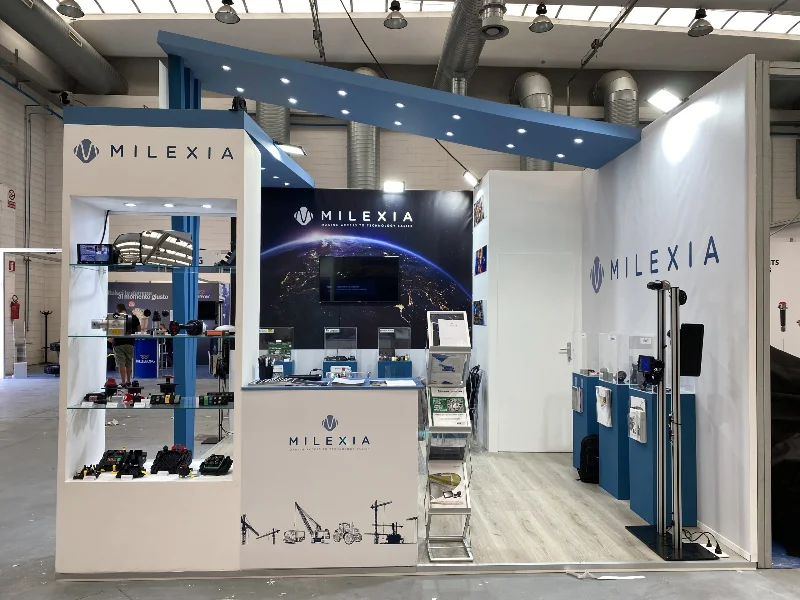
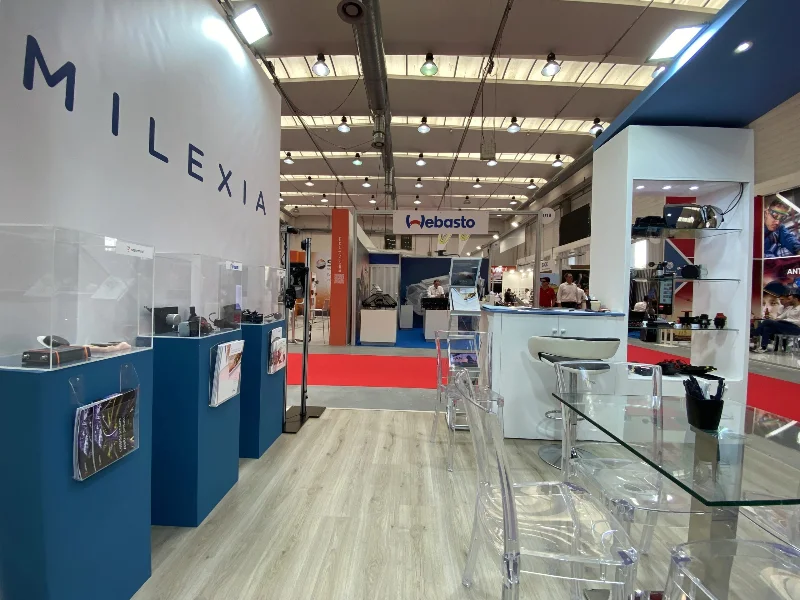
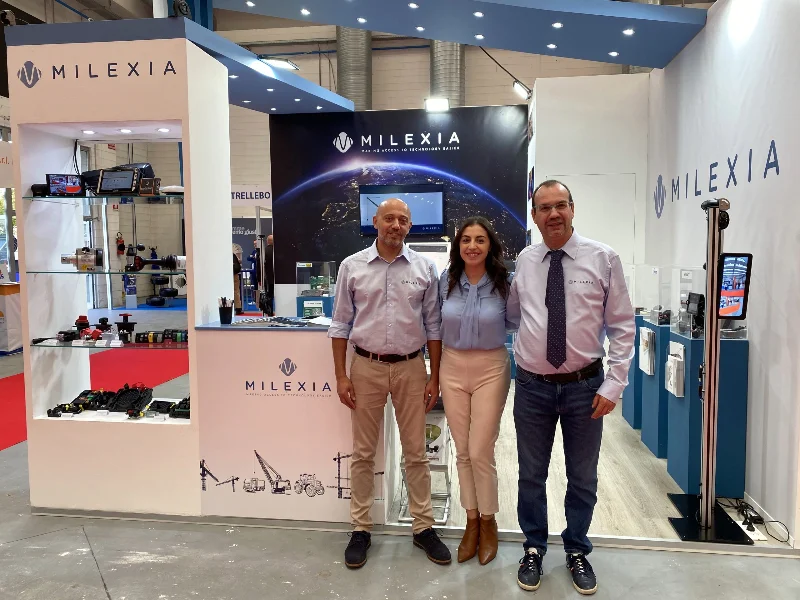
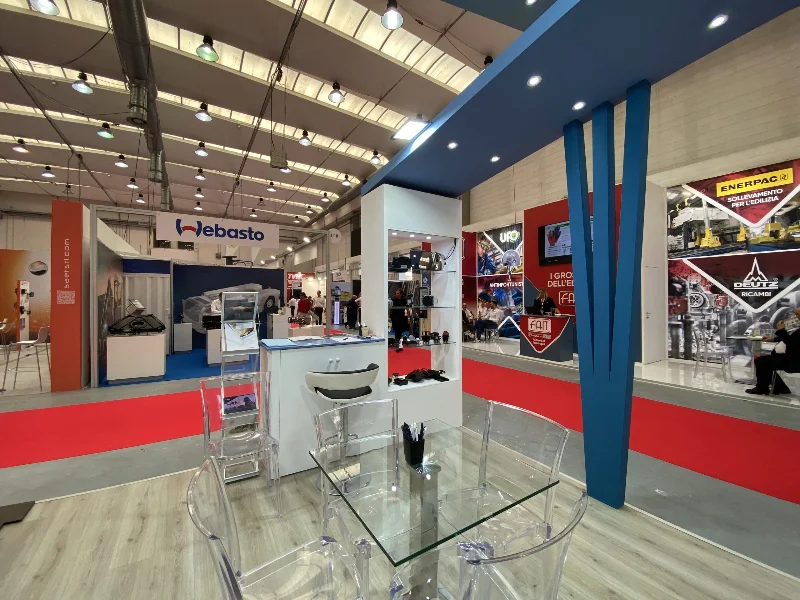
The team from Milexia Italia recently exhibited at GIS fair in Piacenza, an event dedicated to the civil and electronic world.

With around 500 exhibitors and a turnout of over 18,000 visitors, the Milexia team exhibited various solutions of switches, encoders, joysticks, cameras for heavy vehicles and commercial vehicles, as well as multi-constellation and multi-frequency GPS/GNSS positioning technologies for industrial applications.

We would like to thank all those who came to visit us on our Stand and contributed to making GIS 2023 such successful event.

If you missed the opportunity to visit the Milexia stand, do not hesitate to contact us to arrange an appointment with our Civil & Electronics team by emailing: info_italy@milexia.com.

How Milexia Makes It Easier to Watch Global Sporting Events Remotely

Whether you’re travelling long-term, serving in the Armed Forces, or working from a remote location, this connectivity helps you feel more connected to your home and culture, keeps you entertained and gives you a well-deserved break from working life.

However, unless you have the best connectivity technology and can resolve any logistical challenges, you could struggle to watch these global sporting events remotely.

If this is the case, Milexia can help. We are leaders in the precise cutting-edge technology you need to bridge the gap. We can ensure your team gets connected, stays connected and keep morale high.

One of our many success stories…

When the UK Royal Navy wanted to transmit live sporting events, news, and television programmes to their crew during extended deployments at sea to boost morale, they faced several unique challenges.

At that time, The Royal Navy’s existing satellite network had limited bandwidth and severe space constraints that prevented them from using additional onboard equipment or bandwidth-heavy applications. They needed a compact solution that would fit into the minimal available space and adhere to straight bandwidth limitations.

Their existing provider, Astrium, Europe’s premier satellite specialist, recognised how important it was to keep naval crews’ spirits high during extended deployments at sea and therefore sought a reliable partner who could address these unique challenges.

Initially, their proposal included a system using routers and serial modems to provide access to television and sports broadcasts onboard. However, this provided a substantial challenge, consuming valuable space that they simply didn’t have available.

At Milexia, we knew that our innovative, bespoke solutions could help them solve this complex puzzle.

How Milexia’s innovative customisation solved the problem.

As one of the leaders in modern connectivity technology, we used our creativity and deployed an innovative approach to customise two of their ‘off the shelf’ products to reduce their size and reduce the number of devices required from five to just one, saving an impressive 50% in space usage.

Additionally, we integrated the fibre optic driver unit into the down converter, reducing the unit’s overall size. At the same time, Milexia leveraged their existing IP modems provided by their partner Comtech EFData and seamlessly integrated these modems and converters through an internal board, eliminating the need for extra boxes.

Providing a total end-to-end service, Milexia took full responsibility for building, testing, and providing ongoing support to the ships to ensure that The Royal Navy could effortlessly access this technology without stress or confusion.

Successfully Connecting the Armed Forces to Major Sporting Events

This collaboration between Astrium, Milexia and the Royal Navy meant that their naval crew could enjoy a full range of television services including access to major sporting events such as the Football World Cup.

As a result, the crew were happier, felt connected to home and enjoyed a brief break away from work and serving their country. This innovative and bespoke solution and implementation support is now being extended to the UK’s Royal Marines and Army, ensuring that the armed forces can stay connected, even when stationed in remote locations.

You can watch television and major sporting events, wherever you are.

Milexia’s bespoke service and comprehensive support service mean that it’s easier to get connected and stay connected, wherever in the world you are. Whether you’re working in the armed forces, working, or living in a remote location or living and travelling abroad, Milexia can provide you with the reliable solution you need.

Milexia can help your crew watch TV and major sporting events wherever you are.

Contact us today to discuss your bespoke connectivity solution.

Stronger Together

When the electronic component and semiconductor product supply crisis hit the world, labour shortages, unprecedented demand and lack of supplier capacity look set to rock the industry. However, global value-added distributors Milexia Group knew that they still had the capacity to provide the best solutions to their customers.

With an outstanding technical and professional support team, decades of global experience, streamlined processes and an optimal customer-supplier ecosystem, they knew that they could continue to exceed their customer’s expectations.

“Everything we did was so precise. This meant that we could continue to provide the best advice to our customers so they could benefit from the best possible sourcing strategy,” said Xavier Gaillard, Milexia Group CEO in a recent interview. “When we realised that the German company, Globes Elektronik had the same organisational DNA – they focused on putting the customer first – we knew that joining forces would be a win-win situation for us both.”

A partnership that can offer their customers even more.

Founded in Germany in 1995, Globes Elektronik provides outstanding RF, microwave, and electronic solutions to their customers across Germany, Austria, Switzerland and even further afield, drawing on their international network of trusted suppliers.

Like Milexia, they are an innovative and future-focused organisation, keen to enhance what their local and global customers could access by offering a more diverse portfolio, specialised products, and unique solutions without compromising on their values – putting the customer first.

“Globes is a company like Milexia,” added Xavier, “so we understand they must continue to be dynamic in business, despite a difficult economic environment with a tight supply of electronic components.”

 Combined with their solid acquisition strategy within the group’s core countries, Milexia Group has developed a strong position in the market.

Milexia Group is one of the fastest-growing value-added distributors

With sales of 140 million euros and more than 200 employees across five European countries, Milexia helps their customers make informed decisions about electronic components and sub-assemblies used in industries such as defence, space, transportation, scientific instrumentation, and satellite communications.

As a European leader in the hi-tech industry, the Milexia Group helps its customers achieve better outcomes and provides them with easier access to innovative solutions to meet increasingly difficult and complex technological requirements.

 “We’re a value-added distributor who primarily offers technological advice to our customers. This advice is based on in-depth knowledge of the markets, their applications, and an in-depth look at what our Partners and suppliers have to offer,” said Xavier.

“We’re also one of the only distributors with added-value presence in major European countries like France, Germany, Italy, Spain, and the UK. Thanks to the extensive product offering of our Partners and the skills of our employees, we have expanded our historical presence in the defence, space, transport, and scientific instrumentation markets into telecommunications and medical. These are very buoyant markets which will grow by between 5 and 15% over the next five years.”

Milexia’s teams are also true experts in the field of electronics, having been trained by its Partners to deliver tailored support throughout the customer’s project cycle.

How Milexia chooses its Partners

Since Milexia is a trusted value-added global distributor with a focus on their customers, it chooses its Partners carefully based on their values, innovation, product range and how much importance it places on exceeding customers’ expectations.

This means they can provide the professional and technical knowledge and support that customers need throughout their purchase experience, optimise innovation, and design and build bespoke solutions tailored to the specific requirements of their customers.

Tackling the semiconductor supply crisis

With a proven track record throughout the semiconductor supply crisis, Milexia and Globes Elektronik can source the ideal component at the right time, for the right price.

Investing in strong relationships with top class selected Partners within the supply chain has meant that they are better placed than ever before to meet the needs of their customers.

Milexia intends to leverage several additional factors to meet its ambitious growth plans so it can maintain its competitive edge and serve customers and Partners better. They aim to do this with a combination of internal and external goals.

  • Internal: To expand its product range while continuing to provide customers access to local products, supported by specialists with high levels of skills and experience.
  • External: Six major acquisitions have occurred in its core countries over the last five years including Globes Elektronik and the recent Composants Électroniques Lyonnais.

“Always one step ahead, this is also a means that Milexia can position itself in new services, in particular obsolescence management, prototyping, testing and validation,” says Xavier, “We recognise the importance of these services in tackling the technology challenges of the twenty-first century.”

Milexia has been active in the cutting-edge technology market for 30 years, serving over 2300 customers. This drive and determination mean that the Milexia Group is set to exceed market demands and customer expectations for many years to come.

As seen in September issue of hf-praxis, printed in German on page 44-45